
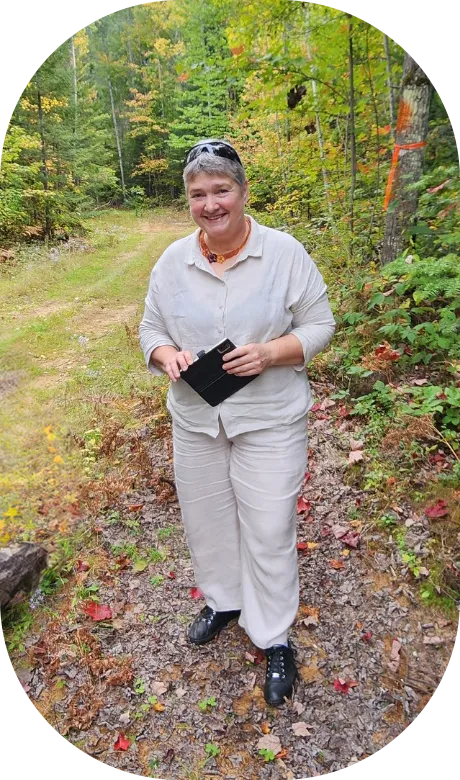
Hello, you’ve reached Erinija 👋
I’m a bioinformatician, computational biologist, researcher, developer & educator.
For the past 20+ years, I’ve been solving foundational problems at the intersection of informatics and biology—covering genetics, machine learning, data mining, and healthcare data operations.
If you’re looking for expertise or project support in genomics, data analysis, or medical data engineering, you can reach me here.








Recent work
Leveraging AI for predictive molecular diagnostics
Scientific literature and bibliographic databases contain a wealth of information about human health. But due to the sheer volume of research being produced today, it’s incredibly hard to parse and synthesize all of the research.
Using a mix of network analysis and machine learning techniques, I developed a method that scans bibliographic databases, and extracts information about trait related biochemical and genomic markers—which can then be used for predictive molecular diagnostic tests.
The research looked specifically at physical fitness indicators, testing for sarcopenia and physical frailty.
Project GEPITEL Genome, epigenome ir telomere length features of sarcopenia and frailty. This project received funding from the Research Council of Lithuania (LMTLT), agreement No S-MIP-22-36.
Computational bioinformatics and research tooling
Pattern matching is an essential part of DNA research, but it can be very time consuming. Specifically in the area of next generation DNA sequencing addressing chromatin and nucleosome dynamics, there’s significant need for faster insights.
To help researchers, in 2020 I developed a tool—dnapatterntools—that analyzes nucleosomal DNA sequences.
The software is written in C++ and comes packaged in a user-friendly interface so it can be used by non-technical researchers. This is achieved using a Galaxy workflow management framework and packaged it into a docker container. You can find more here:
Pipelines for efficient laboratory operations
As laboratories grow and expand their scope of research, they tend to suffer efficiency drain. Often, it’s because they lack the operational infrastructure to handle large sets of data.
During my time at the Children’s Hospital of Eastern Ontario, I installed, calibrated and validated software for the computational pipeline to perform Whole Exome Sequencing (WES) data analysis: alignment, variant calling and annotation, as part of the feasibility project of Regional Genetic program.
Soon after, I also set up the production WES computational pipeline at the Hematology, Oncology and Transfusion centre (HOTC) at Santaros Clinic in Vilnius, Lithuania, to analyze clinical samples. I maintained it for two years, processing 800 patient exomes.
ABOUT ME
Bio: Erinija Pranckeviciene
I hold an Informatics Engineering degree from Kaunas University of Technology, 1998; a Bioinformatics PhD from University of Ottawa, 2015, and a uOttawa Postdoctoral fellowship, 2017. I also participated in the Genomic Counselling and Variant Interpretation program at University of British Columbia, 2022;
I’ve contributed to the industry as a bioinformatician in Children’s Hospital of Easter Ontario (CHEO), Verspeeten Clinical Genomics Center at London Health Sciences Center (LHSC) Ontario, and The Hospital of Sick Children (SickKids).
I love to teach and am a lifelong educator at the Vilnius University Faculty of Medicine, and Vytautas Magnus University Faculty of Informatics. I’ve published extensively about genomics, computational biology, bioinformatics, and machine learning. I am a member of IEEE EMBS, CLSI, ASHG, ESHG and Lithuanian Society of Human Genetics.
Let's talk
Need help with your bioinformatics project, healthcare data analysis, or data pipeline?
You can reach me at erinija.pranckeviciene [at] gmail.com, or find me on LinkedIn, ResearchGate, or GitHub.